You have found droppings in your kitchen or heard scratching in the walls. You know you have a rodent problem, but is it mice or rats? Getting the answer right matters more than you might think.
Mice and rats behave differently, nest in different places, and require different treatments. Using mouse traps for a rat problem, or vice versa, often fails completely. Knowing which pest you are dealing with is the first step to solving the problem.
Why Correct Identification Matters
Many homeowners assume all rodents are basically the same. This leads to wasted time and money on ineffective treatments.
Here is why identification is crucial:
- Trap sizes differ significantly between species
- Bait preferences vary
- Entry point sizes are different
- Nesting behaviours require different approaches
- Treatment quantities and placement change
Professional local pest control services always start with proper identification. It shapes every decision about treatment.
Quick Comparison Guide
| Feature | Mouse | Rat |
|---|---|---|
| Body length | 3 to 10cm | 15 to 27cm |
| Tail | Longer than body, thin | Shorter than body, thick |
| Ears | Large relative to head | Small relative to head |
| Head shape | Triangular, pointed snout | Blunt, rounded snout |
| Droppings | 3 to 8mm, pointed ends | 10 to 20mm, rounded ends |
| Droppings per day | 50 to 80 | 30 to 50 |
| Typical weight | 15 to 30g | 200 to 500g |
| Lifespan | Around 1 year | 1 to 2 years |
Physical Differences Explained
Size
This is the most obvious difference, but it is not always helpful. Young rats and adult mice can appear similar in size. Do not rely on size alone.
Adult mice typically measure 3 to 10cm in body length, not including the tail. Their total length with tail reaches around 15 to 20cm. They weigh just 15 to 30 grams, light enough to run across thin cables and surfaces.
Adult rats are considerably larger. Brown rats (the common UK species) have bodies measuring 15 to 27cm, with total length including tail reaching up to 45cm. They weigh 200 to 500 grams, roughly 15 times heavier than a mouse.
Ears and Head Shape
Looking at proportions helps distinguish the species:
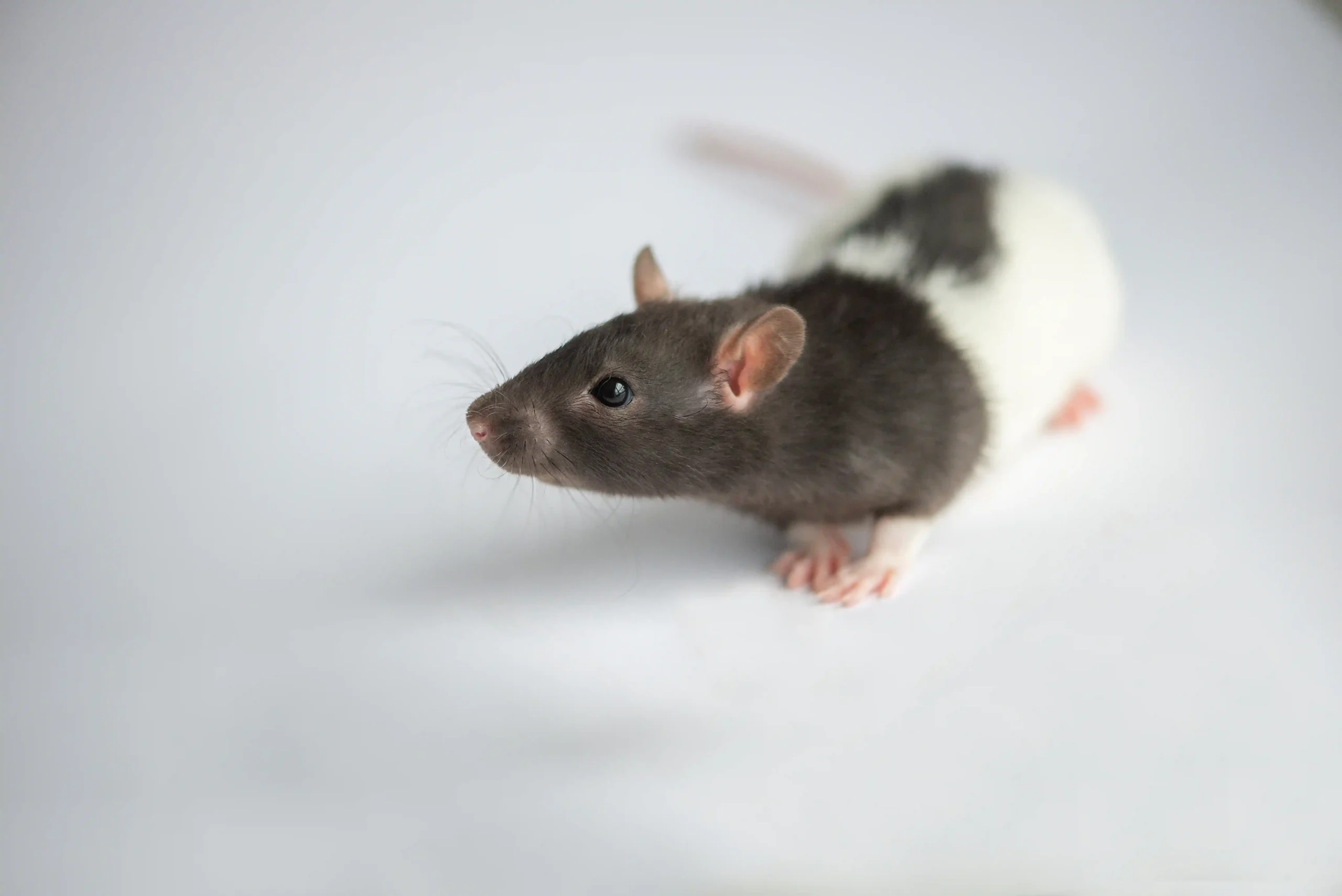
Mice have large, round ears relative to their head size. Their snout is pointed and triangular. The overall head shape appears delicate.
Rats have smaller ears in proportion to their head. Their snout is blunter and more rounded. The head looks heavier and more robust.
Tail
Mouse tails are thin, lightly furred, and longer than their body. They appear delicate and flexible.
Rat tails are thick, hairless or sparsely furred, and shorter than their body. They look more substantial and scaly.
Droppings: The Most Reliable Sign
Since you rarely see the animals themselves, droppings often provide the best identification. According to the Royal Horticultural Society, mice and voles are small rodents that sometimes damage plants, whilst rat droppings are about twice the size of mouse or vole droppings.
Mouse droppings:
- Size: 3 to 8mm long (roughly like a grain of rice)
- Shape: Pointed at both ends
- Colour: Dark brown to black when fresh
- Quantity: 50 to 80 per day
- Location: Scattered randomly along travel routes
Rat droppings:
- Size: 10 to 20mm long (roughly like an olive pit)
- Shape: Rounded at the ends
- Colour: Dark brown to black when fresh
- Quantity: 30 to 50 per day
- Location: Often grouped in specific areas
Fresh droppings are soft and shiny. Old droppings become hard, dry, and grey. Finding fresh droppings confirms current activity.
Behaviour Differences
Understanding behaviour helps explain what you are experiencing and guides treatment:
Feeding Habits
Mice are nibblers. They eat small amounts from many different sources, sampling food throughout the night. This makes them harder to bait effectively. They may take a tiny amount and move on.
Rats are more cautious eaters. They prefer to eat substantial amounts from fewer sources. They are also neophobic (fear new things), which means they often avoid new objects like traps for several days.
Movement Patterns
Mice are curious and exploratory. They investigate new objects in their environment quickly. They climb well and often travel through wall cavities and across ceilings.
Rats are cautious and stick to familiar routes. They typically travel along walls, leaving grease marks (smear marks) from their oily fur. They are strong swimmers and often use drain systems.
Nesting
Mice build nests from shredded materials close to food sources. They do not need much water and can survive on moisture in food. Indoor nests are common in wall cavities, behind appliances, and in stored items.
Rats need more water and typically nest closer to water sources. Common sites include drains, beneath buildings, in gardens, and inside outbuildings. They burrow into soil and create complex tunnel systems.
Common Entry Points
The entry points rodents use reveal which species you are dealing with:
Mice need just 6mm, about the width of a pencil. They squeeze through gaps around pipes, under doors, and through small cracks. Any hole you can fit a biro through could admit a mouse.
Rats need around 15mm, about the size of a pound coin. They use larger openings around pipes, damaged air vents, gaps in roofing, and broken drain covers. They can also gnaw through softer materials to enlarge holes.
What to Do Once You Have Identified Your Pest
For mice:
- Seal all gaps larger than 6mm
- Remove food sources and store everything in sealed containers
- Set appropriate traps along walls where droppings appear
- Check traps daily
For rats:
- Seal entry points larger than 15mm
- Remove outdoor food sources like bird feeders
- Ensure drains are intact and covers secure
- Check for burrows in gardens and near buildings
For both species, professional help often produces faster, more reliable results. Mice removal and rat control require different approaches, and trained technicians identify problems you might miss.
When Professional Help Is Essential
Call local pest control if:
- You have seen multiple rodents
- Droppings appear in several locations
- DIY treatments have not worked within two weeks
- You are dealing with food preparation areas
- Entry points are not obvious
- You suspect rats in drain systems
At Nature’s Way Pest Control, we have helped Essex homeowners identify and treat rodent problems for over 30 years. Our RSPH Level 2 trained technicians serve Chelmsford, Southend, Basildon, Brentwood, Rayleigh, and all surrounding areas.
FAQs
Can I have both mice and rats in my property?
It is uncommon. Rats are predatory towards mice, so mice generally avoid areas where rats are present. If you are seeing evidence of both species, you likely have separate entry points serving different areas. Professional inspection can clarify the situation.
I have found droppings but never seen a rodent. Is this normal?
Absolutely. Rodents are nocturnal and naturally cautious. Most infestations are discovered through droppings, sounds, or damage long before anyone sees the animals themselves. Finding droppings without sightings does not mean the problem is small.
Do mice eventually become rats?
No. This is a common myth. Mice and rats are completely different species. Young rats may look similar to adult mice, but they do not transform from one into the other. If you are unsure, droppings are the most reliable way to identify which species you have.
Are rats more dangerous than mice?
Both carry health risks. Rats can transmit diseases including leptospirosis (Weil’s disease) and cause significant structural damage with their gnawing. Mice contaminate food with droppings and urine and can trigger allergies. Both should be treated promptly. The main practical difference is that rat infestations typically cause more visible damage due to their size.
Nature’s Way Pest Control provides expert rodent control across Essex. With over 30 years of experience and RSPH qualified technicians, we accurately identify your pest problem and deliver effective solutions. Contact us today for a free assessment.