 Loughton sits right on the edge of Epping Forest, which makes it one of the most wildlife-rich towns in Essex. In the warmer months, the trees and green space are part of what makes the area so special. Once winter sets in, though, that same forest edge becomes a direct motorway for grey squirrels, mice and rats heading straight for your loft.
Every winter our phone lines light up with Loughton homeowners hearing scratching sounds above their bedrooms. Here is why it happens, what to watch for, and what to do next.
Why Loughton Homes Get Hit Harder Than Most
Most Essex towns have gardens and patches of green. Loughton has something different: a full ancient forest on the doorstep. Epping Forest covers nearly 6,000 acres and pushes right up against residential streets in places like Debden, Loughton Broadway and High Beach.
This creates a perfect storm in winter. When temperatures drop and natural food gets scarce, wildlife moves towards warmth and shelter. Your loft is dry, warm, quiet and full of soft insulation that makes excellent nesting material. From a rodent’s point of view, it is a five-star hotel.
The mature trees that line so many Loughton roads also give squirrels a free ladder straight onto your roof. A grey squirrel can leap nearly two metres sideways, which means any branch within that range of your guttering is an open invitation.
The Main Winter Culprits
Three species cause the bulk of winter loft problems in Loughton properties:
| Pest | How They Get In | Warning Signs | Main Risks |
|---|---|---|---|
| Grey squirrels | Tree branches, damaged fascia boards, gaps under roof tiles | Loud scratching during daytime, gnawed timber, stripped insulation | Fire hazard from chewed wiring, structural damage |
| House mice | Gaps as small as 6mm, air vents, cable entry points | Dark droppings, rustling at night, smear marks on walls | Contaminated food, chewed cables, disease spread |
| Brown rats | Broken air bricks, drainage routes, climbing walls via pipes | Strong musty smell, larger droppings, scraping noises | Leptospirosis, property damage, rapid breeding |
Grey squirrels are usually the loudest and most damaging. The grey squirrel population across Great Britain is now estimated at around 2.7 million, and forest-edge towns like Loughton carry far more than their fair share.
How the Tree Canopy Makes Loughton Different
Ant prevention and general spring pest advice applies across Essex, but Loughton’s specific problem is the canopy. In streets like Albion Hill, Englands Lane and anywhere backing onto the forest, trees often overhang roofs. Squirrels do not need to come to ground level at all, which means traditional ground-based deterrents do very little on their own.
Our technicians have seen squirrel entry points in Loughton that most homeowners would never spot. Common weak points include:
- Gaps where soffit meets fascia board
- Loose or slipped roof tiles, especially near chimneys
- Corners where extensions meet the main roof
- Old ventilation grilles with damaged mesh
- Gaps around satellite dish fittings and aerial cables
Once inside, a squirrel will widen any small hole with its teeth. The entry point you can see today may be double the size by next week.
Warning Signs Homeowners Often Miss
Most people call us when they finally hear scratching at 3am. By that point, the pests have usually been there for weeks. Earlier signs are easy to miss unless you know what you are looking for.
Daytime noise is the biggest giveaway for squirrels. Unlike mice and rats, squirrels are active during the day, so if you hear scuttling between dawn and dusk, it is almost certainly a squirrel. Scratching at night is more likely to be rodents.
Other early warnings include small piles of insulation appearing in odd places, fresh wood shavings under loft timbers, gnaw marks on the edges of beams or boxes, and tooth marks on plastic water tanks or pipes. Outside the house, look for muddy paw prints on window sills near the roofline and fresh damage to fascia boards.
The most dangerous sign is anything electrical: flickering lights, tripped circuit breakers or a faint burning smell. Rodents and squirrels both chew wiring, and stripped cables in a loft are a genuine fire risk. The London Fire Brigade attends hundreds of rodent-related fires every year across the capital and its outer suburbs.
The Health and Property Risks
Beyond fire, there are other reasons not to ignore the problem. Rats can carry leptospirosis, salmonella and other pathogens through their urine and droppings. Mice contaminate food and spread bacteria across every surface they cross. Squirrel droppings can trigger respiratory issues and spread disease to pets.
Structural damage adds up quickly too. A family of squirrels can shred an entire loft’s worth of insulation in weeks, which pushes up your heating bills dramatically. Rats chew through plumbing, leading to leaks that often go undetected until ceilings start staining.
For more detail on why grey squirrels are treated as an invasive pest species in England, the government’s updated policy paper on managing the impact of grey squirrels sets out the scale of the problem nationally.
Why DIY Rarely Works in Forest-Edge Properties
Shop-bought traps and poison blocks have their place, but they struggle in Loughton for two reasons. First, the forest provides an endless supply of replacement pests. Kill one squirrel and another will find the same entry point within days. Second, grey squirrels are legally classified as an invasive species, which means there are strict rules about how they can be humanely dispatched. Getting this wrong can cause unnecessary suffering and even legal problems.
The only long-term fix is proper proofing: identifying every entry point, sealing it with materials the animals cannot chew through, and monitoring the property through the winter.
How Nature’s Way Handles Loughton Loft Infestations
With over 30 years of experience across Essex and RSPH Level 2 trained technicians, we know the local area inside out. Our approach for forest-edge properties combines thorough inspection, humane removal and long-term proofing.
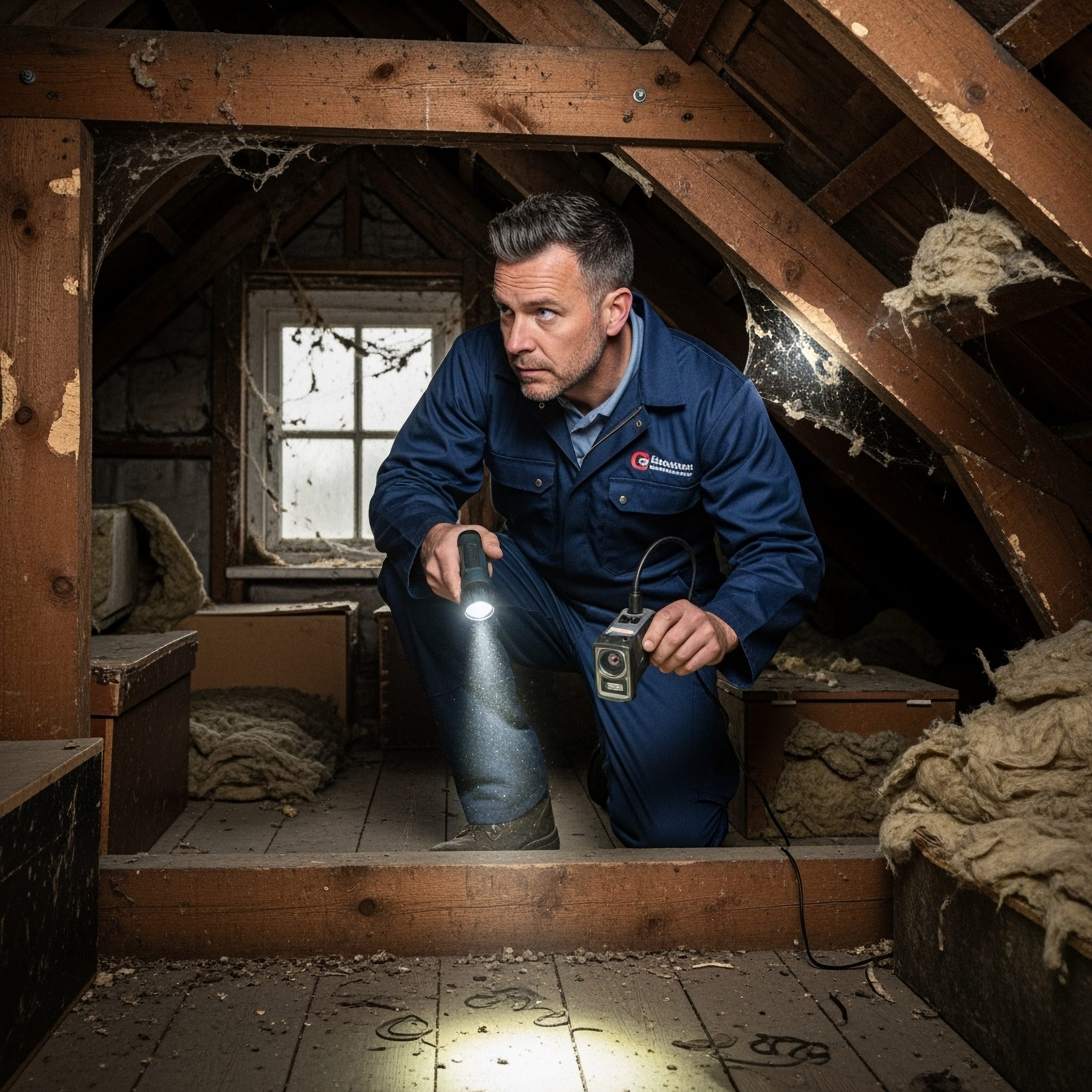
We start with a full roof and loft survey, inside and out. Our specialist pest control Loughton team looks for every possible entry point, including ones you cannot see from the ground. For squirrel problems, we use proven trapping methods through our dedicated grey squirrel removal service, followed by proofing with wire mesh and sealants that squirrels cannot chew through. For mouse infestations, our mice removal specialists use targeted treatment combined with exclusion work so they do not simply return.
As NPTA members, we work to current industry guidelines and use eco-friendly methods wherever possible. We also offer follow-up visits through the winter to make sure the problem stays fixed.
FAQs
How do I know if it is a squirrel or a rat in my loft? Squirrels are active during the day and make louder, heavier thumping and scampering noises. Rats and mice are mostly nocturnal and make quieter scratching or scurrying sounds. Squirrel droppings are also larger and more elongated than rat droppings.
Why do pests come into lofts specifically in winter? Lofts are warm, dry and safe. As temperatures fall and natural food becomes scarce, wildlife looks for sheltered spots to nest and rest. Lofts also have soft insulation that makes ideal nesting material and very little disturbance from humans.
Can I remove a grey squirrel myself? Legally you can, but grey squirrels must be humanely dispatched and it is illegal to release them back into the wild. Most homeowners find this difficult and unpleasant. Professional pest controllers have the right equipment and training to handle it quickly and lawfully.
How long does it take to sort out a loft infestation? Most cases are resolved within one to two weeks, depending on the size of the infestation and the number of entry points. Proofing work may take an additional visit, but it is the step that stops the problem coming back year after year.