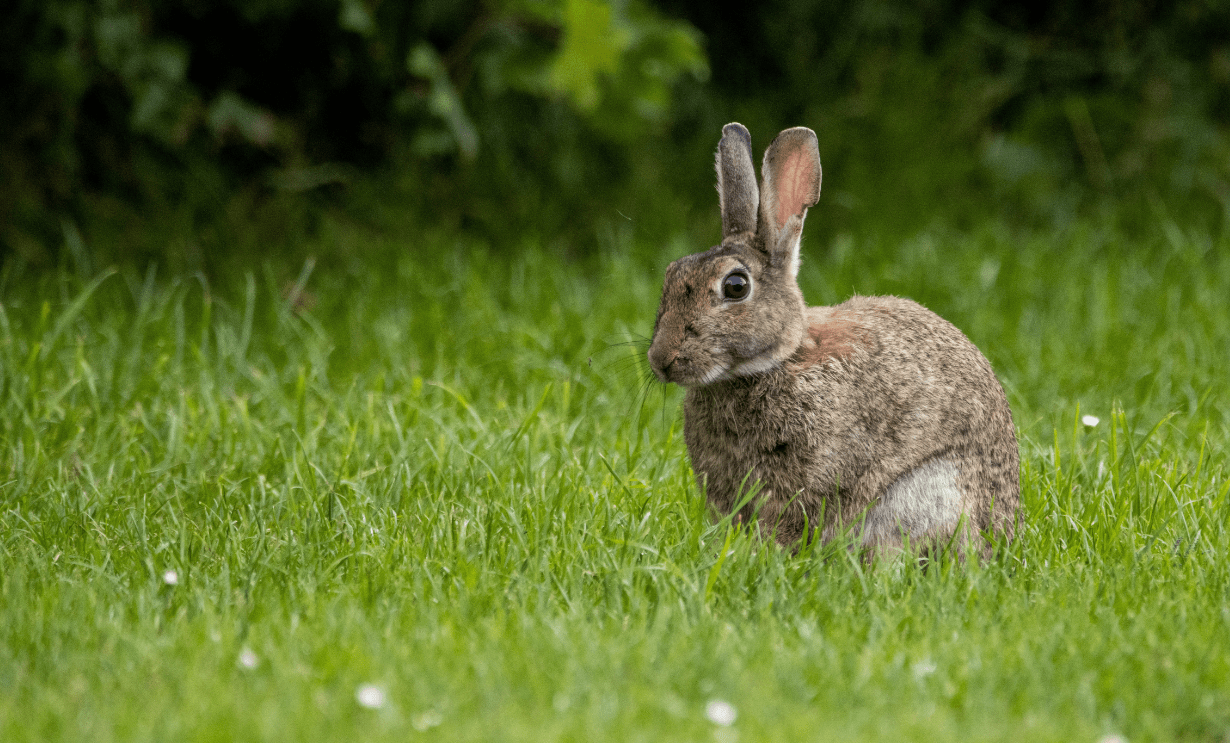
Rabbits might look cute, but they can cause serious problems for gardeners. These small mammals have big appetites and can quickly damage plants you’ve worked hard to grow. At Nature’s Way, we help gardeners across the UK deal with rabbit problems using kind and effective methods.
Common Garden Damage Caused by Rabbits
Rabbits can harm your garden in several ways:
Plant Damage
- Clean-cut stems: Rabbits leave a sharp, angled cut on plants, looking like they were trimmed with scissors
- Missing seedlings: Young plants often disappear overnight
- Bark stripping: In winter, rabbits strip bark from young trees and shrubs
- Flower damage: They eat flower heads and buds, often just before they bloom
- Vegetable losses: Leafy greens, carrots, peas and bean plants are rabbit favourites
Lawn and Ground Damage
- Scrapes and digging: Shallow holes where rabbits have been looking for roots
- Burrows: Larger holes where rabbits might be nesting
- Droppings: Small, round pellets scattered across your garden
- Runways: Worn paths through grass where rabbits travel regularly
How to Tell If Rabbits Are in Your Garden
Look for these clear signs:
- Droppings: Small, pea-sized pellets that are usually light brown
- Footprints: Four-toed front prints and five-toed back prints
- Fur tufts: Caught on fences or plants where rabbits squeeze through
- Dawn/dusk sightings: Rabbits are most active in early morning and evening
- Plant damage: The clean-cut damage mentioned above
Ten Effective Ways to Protect Your Garden
Here are practical steps to keep rabbits away from your plants:
Physical Barriers
- Fencing: The most reliable option
- Use wire mesh with holes smaller than 2.5cm
- Bury the fence at least 15cm underground to prevent digging
- Make sure it’s at least 90cm high
- Bend the bottom 15cm outwards to create an L-shape underground
- Plant guards: Protect young trees and shrubs
- Use plastic spiral guards or wire mesh cylinders
- Make sure they’re tall enough (60cm minimum)
- Leave space for growth
- Raised beds with barriers: Add mesh underneath and around sides
- Use raised beds at least 60cm high
- Line the bottom with wire mesh before adding soil
- Extend mesh up the sides if needed
Deterrents
- Scent deterrents: Create smells rabbits dislike
- Blood meal or bone meal fertiliser (helps plants too)
- Garlic and chilli sprays (reapply after rain)
- Commercial rabbit repellents (follow package instructions)
- Plants rabbits avoid: Create a natural barrier
- Strong-smelling herbs like lavender, rosemary, and sage
- Fuzzy plants like lamb’s ears
- Toxic plants like foxgloves (but be careful if you have pets or children)
- Motion-activated devices: Startle rabbits away
- Water sprinklers that turn on when movement is detected
- Solar-powered flashing lights
- Ultrasonic devices that emit sounds rabbits dislike
Garden Management
- Keep your garden tidy: Reduce hiding places
- Cut tall grass regularly
- Remove piles of wood or garden debris
- Fill in holes promptly
- Protect vulnerable plants first: Focus on their favourites
- Use cloches or mini-fences around vegetable patches
- Protect new spring growth with temporary covers
- Move containers to areas rabbits don’t visit
- Create a “sacrifice area”: Give them an alternative
- Plant clover or other rabbit-friendly plants far from your main garden
- This might satisfy rabbits enough to leave other plants alone
- Use companion planting: Mix in rabbit-repelling plants
- Plant onions, garlic, or leeks among vulnerable plants
- Surround vegetable beds with strong-smelling herbs
Seasonal Rabbit Problems
Rabbit issues change with the seasons:
Spring
- Baby rabbits appear
- New plants are vulnerable
- Focus on protecting seedlings and new growth
Summer
- Rabbit populations peak
- Garden produce becomes a target
- Maintain fences and deterrents
Autumn
- Rabbits prepare for winter
- Late vegetables and perennials at risk
- Check fences for holes before winter
Winter
- Food becomes scarce for rabbits
- Bark and evergreens become targets
- Protect young trees with guards
Humane Rabbit Management
At Nature’s Way, we believe in humane approaches:
- No harmful traps: They often cause injury and suffering
- No poisons: These are dangerous to pets, wildlife, and people
- Working with nature: Creating balanced gardens where some wildlife can coexist with your plants
If rabbit problems persist, professional advice can help create a plan for your specific garden.
When to Call Professionals
Consider expert help when:
- Rabbits have established burrows on your property
- DIY methods haven’t worked after several attempts
- Damage is extensive or costly
- You need help installing proper fencing
- You want advice on long-term solutions
The Law and Wild Rabbits
It’s important to know that:
- Wild rabbits are considered pests under UK law
- You can legally control them on your own property
- You must use humane methods
- Some control methods require specific licences
- Professional pest controllers understand these rules
Conclusion
With the right approach, you can protect your garden from rabbit damage while still enjoying wildlife. The most successful gardeners use a mix of methods, adjusting their approach based on the season and severity of the problem.
Regular garden checks help you spot problems early, when they’re easier to solve. If rabbits are causing serious problems, remember that Nature’s Way can provide expert advice and humane solutions tailored to your garden.