Every autumn, the same headlines come back. “False widow invasion.” “School shut by killer spiders.” Then someone spots a big, dark spider on the landing, remembers the headline, and the whole house goes on high alert.
Most of the time, that spider is not a false widow at all. It is a giant house spider, which is one of the most common spiders in Britain and completely harmless. But the two do get mixed up, and it is hard to tell them apart when you are standing on a chair holding a glass and a piece of card.
This guide is here to help you work out what you are actually looking at. We will go through the differences side by side, explain what a false widow bite really involves, and be honest about when pest control for spiders is worth booking and when you can leave well alone.
Why so many spiders turn up at once
Before we get into identification, it helps to know why you are suddenly seeing spiders everywhere.
From late August through to November, male spiders reach adulthood and go looking for a mate. They leave their hiding places and start running across floors and up walls, usually in the evening. They are not moving in. In most cases, they have been living quietly in your loft, garage or cavity walls all year. You are just noticing them now.
We cover this seasonal pattern in more detail in our post on why spiders invade homes in autumn.
The two spiders people confuse
The giant house spider
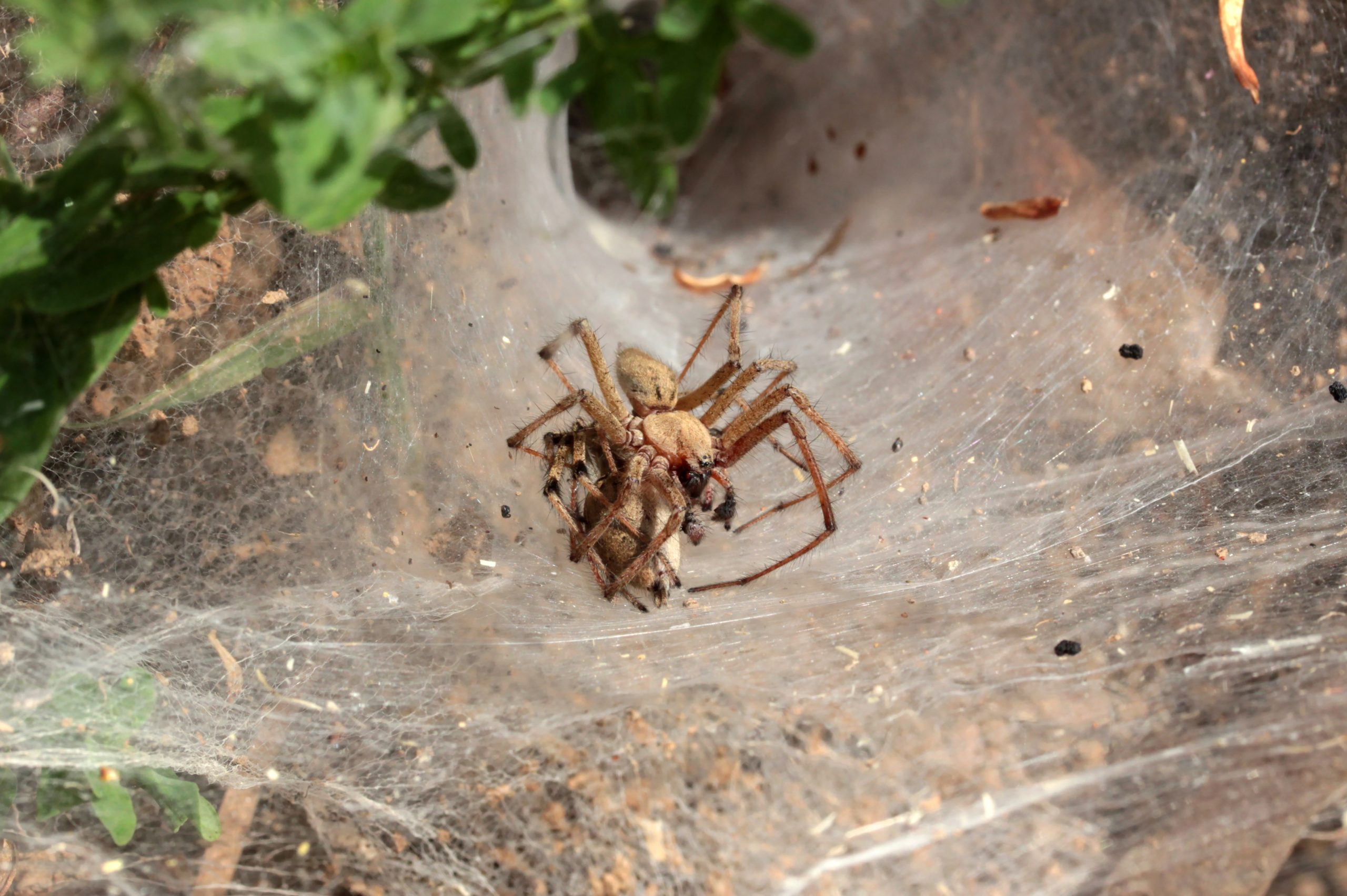
This is the big one. Long legs, dark brown body, moves at real speed across the carpet and then freezes. Its body can reach around 1.6cm, but the leg span can be up to 7.5cm, which is what makes it look so alarming.
The giant house spider builds a flat, messy sheet web with a funnel or tube at one end. It sits inside that tube and waits. You will find these webs behind the sofa, in the corner of the garage, under the stairs and in the shed. The spider you find sprinting across the bathroom floor at ten at night is almost always a male giant house spider looking for a female.
It cannot harm you. It is fast, it is large, and it is completely harmless.
The noble false widow
The noble false widow (Steatoda nobilis) looks very different once you know what to look for. It is smaller and rounder. Females are around 8.5mm to 14mm in body length, males a bit less.
The key feature is the abdomen. It is shiny, bulbous and almost globe-shaped, a bit like a small glossy brown bead. On top there is a cream or pale marking that people often describe as skull-shaped, although it is closer to a pentagon. This marking is clearest on males and can be faint or missing altogether on older females. The legs are a plain reddish brown with no stripes or bands.
Its web is nothing like a sheet. It is a loose, untidy tangle of criss-cross threads, and it gets denser in the middle if nobody disturbs it. False widows like high spots, so check the top corners of rooms, conservatories, porches, window frames and outside walls near lights, where flying insects come to them.
The Natural History Museum has a detailed false widow identification page with clear photographs if you want to compare what you have found.
Side-by-side comparison
| Feature | Noble false widow | Giant house spider |
|---|---|---|
| Body size | 7mm to 14mm | Up to 1.6cm body, leg span up to 7.5cm |
| Body shape | Round, shiny, bulbous abdomen | Longer, flatter, hairy body |
| Colour | Glossy dark brown to black abdomen, reddish brown legs | Dull brown all over, often with faint patterning |
| Markings | Cream or pale skull or pentagon shape on top of abdomen, pale band at the front | No cream skull marking |
| Legs | Shorter, thicker, plain reddish brown | Very long, thin and hairy |
| Web | Loose, messy tangle of criss-cross threads | Flat sheet web with a funnel or tube to hide in |
| Where it sits | High up: ceiling corners, conservatories, porches, outside walls near lights | Low down and hidden: behind furniture, in sheds, garages, under stairs, in the bath |
| Behaviour | Slow, stays in or near its web | Very fast, runs across open floors, especially at night |
| Risk to you | Can bite, but rarely does. Usually mild | Harmless |
If you remember only one thing, make it this: a shiny round body sitting still in a high corner is worth a second look, long legs sprinting across the floor are a house spider.
Are false widows dangerous?
This is the question everyone actually wants answered, so here is a straight reply.
Noble false widows can bite. They are the most likely spider in Britain to give a bite that you would notice. But they are not aggressive, and they do not hunt people. Almost every recorded bite happens when the spider is trapped against skin, for example inside clothing that has been left on the floor, in a glove, in bedding or when somebody picks one up.
For most people, a bite feels like a sharp pinprick followed by a few hours of soreness, redness and swelling, roughly on a par with a wasp sting. It usually settles down on its own within a day or two.
A small number of people have a stronger reaction, and as with any broken skin, there is a chance of a secondary infection. If the area around a bite spreads, gets hot, weeps or you feel unwell, see your GP or call NHS 111. Do not try to treat it yourself and do not panic. Serious cases in the UK are very rare.
What false widows are not is deadly. They are relatives of the black widow, not the same spider, and their venom is far weaker. The scare stories every autumn are not a fair picture of the risk.
When to call a professional
Most spiders in most homes need nothing more than a glass, a piece of card and an open window. Sensible prevention goes a long way too, and our guide to keeping spiders out of your home covers the practical steps: sealing gaps, cutting back plants near walls, clearing webs regularly and changing outside lighting.
There are situations where booking treatment is a sensible decision rather than an overreaction:
- You keep finding false widows in the same room. One in the porch is normal. Several in a child’s bedroom, week after week, is worth dealing with properly.
- There are large numbers in a garage, loft, shed or outbuilding. Heavy webbing and lots of egg sacs point to a settled population that will keep producing more.
- You have found egg sacs. A single sac can hold hundreds of spiderlings, so removing the adults you can see does not solve much.
- Someone in the house has a real phobia. Arachnophobia is not silly. If a family member cannot use a room, that is a proper reason to act.
- You run a business. Cafés, shops, offices, salons, nurseries and holiday lets all get judged on how they look. Visible webs and spiders in corners cost you reviews and bookings.
- Nothing you have tried has worked. Repeat problems usually mean an entry point or a damp spot that has been missed.
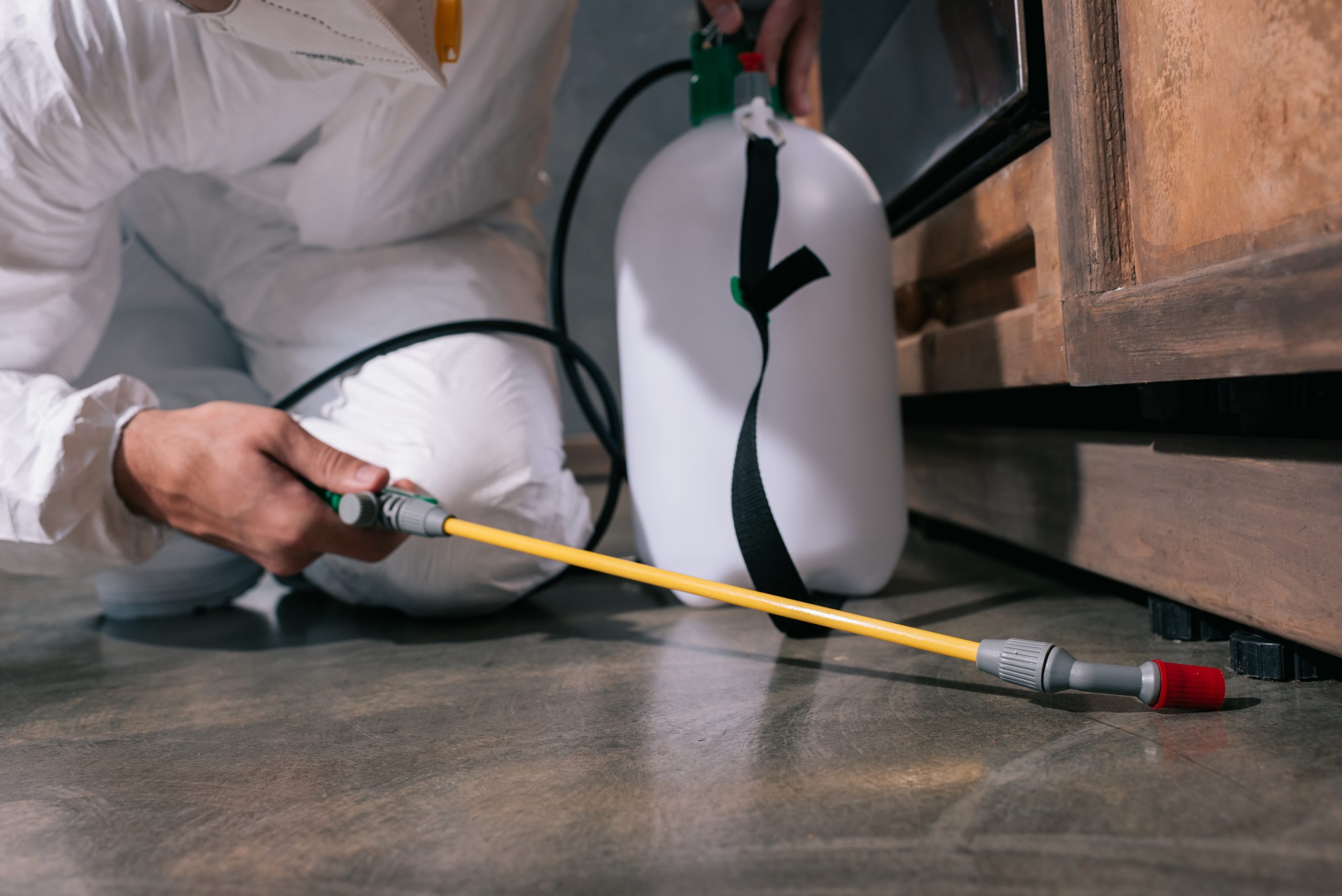
A professional visit is not just spraying. Our technicians find where the spiders are actually nesting, in lofts, cavity walls, basements and behind boxing, then treat those areas with products that keep working after the visit. We also tell you what is drawing them in, because spiders follow their food. If your home is full of flies, moths and other insects, you will keep getting spiders, which is where professional insect control makes the bigger difference.
Getting help in Essex
Natures Way has been dealing with pests across Essex since 1990. All our technicians are trained to RSPH Level 2, we are members of the NPTA, and we work in a way that is safe for your family and pets.
If you are not sure what you have found, send us a photograph. We would far rather tell you honestly that it is a harmless house spider than sell you a treatment you do not need.
If you do need help, we offer fast and effective spider removal in Essex, with same-day response available across Southend-on-Sea, Basildon, Brentwood, Stanford Le Hope, Rayleigh, Chelmsford and the surrounding areas.
Get in touch with Natures Way today, and we will take a look.